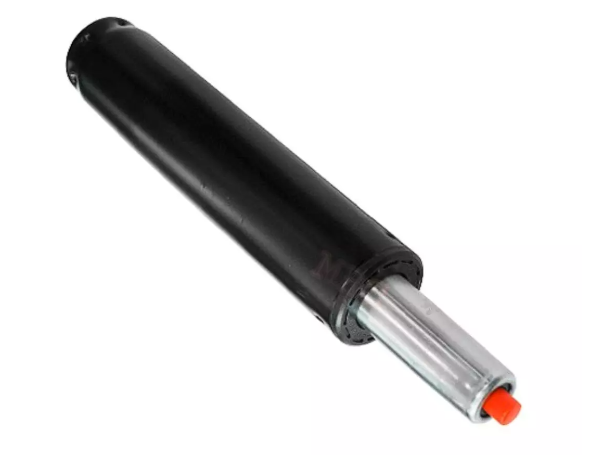
If you've ever pulled the lever on an office chair and felt the seat smoothly rise or lower, you've already used a gas cylinder. It sits between the chair mechanism and the five-star base and does a surprisingly important job: it provides the height adjustment while supporting the person sitting in the chair.
The cylinder is easy to ignore when everything works normally. But when a chair starts slowly sinking, refuses to stay at the selected height, or needs repeated adjustment, the gas cylinder is one of the first components worth checking.
In this guide, I'll explain what the cylinder does, how it works, which measurements matter when replacing one, what Class 3 and Class 4 mean, and the mistakes I would avoid when buying a replacement.
Quick answer
An office chair gas cylinder is a sealed pneumatic component that allows the seat to move up and down while supporting the user's weight at the selected height. If a healthy chair gradually sinks while someone is sitting in it, the cylinder is often the part that needs replacing.
What is an office chair gas cylinder?
The gas cylinder is the metal assembly positioned between the five-star chair base and the seat mechanism.
It is sometimes called a gas lift, gas spring, or pneumatic cylinder. Although the terminology varies between manufacturers and sellers, these names generally refer to the same type of chair component.
From the outside, most cylinders consist of a black outer body and a polished metal piston rod. Some have a plastic telescopic cover around the cylinder, but that cover is mainly there for appearance and protection. The pressurised cylinder underneath is the working part.
What does the gas cylinder actually do?
There are two main jobs:
- Adjusting seat height: it allows the chair to move upward or downward when the height lever is operated.
- Holding the selected height: once the lever is released, the cylinder holds the seat at the selected position during normal use.
This is why a gas-cylinder problem can be particularly annoying. The rest of the chair may look perfectly fine, but if the cylinder cannot maintain its position, the chair becomes difficult to use.
How does an office chair gas cylinder work?
Inside the sealed cylinder is a pressurised gas system and a piston. The gas pressure provides the force that moves the piston when the cylinder's valve is opened.
When you operate the height lever, the chair mechanism presses the valve at the top of the cylinder. This allows the internal mechanism to move and the seat can travel upward or downward.
When you release the lever, the valve closes again. The cylinder then holds the seat at the selected height.
The exact internal construction can vary between manufacturers, so you do not need to take the cylinder apart to understand whether it is working correctly. In fact, you should not attempt to open or modify a pressurised cylinder.
Why a sinking chair usually needs a new cylinder
A common symptom of cylinder failure is a chair that slowly lowers while you are sitting on it. The internal sealing system is no longer maintaining pressure properly, allowing the piston to move under load.
A gas cylinder is a sealed component, so it is normally replaced rather than repaired internally. If the cylinder is the confirmed cause of the problem, replacing the complete unit is the practical fix.
What does an office chair gas cylinder look like?
The main parts you can identify from the outside are fairly simple:
- Outer cylinder body: the larger black metal section.
- Piston rod: the polished metal section that moves in and out.
- Valve end: the upper section that interacts with the chair mechanism.
- Protective cover: some chairs have a plastic sleeve covering part of the cylinder.
The photograph above shows the general shape of a typical office chair gas cylinder. The exact dimensions and mounting details can vary, which is why measuring your existing cylinder is important before ordering a replacement.
Which gas cylinder measurements matter?
One of the easiest mistakes when replacing a cylinder is assuming that every gas lift is exactly the same. Many office chairs use standardised fittings, but dimensions and travel can still differ.
Before buying a replacement, check the dimensions of the cylinder currently installed in your chair.
| Measurement | Common range | Why it matters |
|---|---|---|
| Outer body diameter | Often around 50 mm | Determines compatibility with the chair base and mechanism. |
| Piston rod diameter | Often around 28 mm | Helps identify the replacement style. |
| Body length | Varies by model | Influences the available seat-height range. |
| Stroke | Varies by model | Determines how far the seat can travel. |
| Top fitting / valve arrangement | Varies | Must match the chair mechanism. |
Measure the correct part
If you are measuring the cylinder for replacement, pay particular attention to the outer body and the overall working dimensions rather than measuring the exposed piston rod alone.
The piston rod moves during normal chair adjustment, so its exposed length can change. A measurement taken while the chair is at one height may therefore be different from the measurement at another height.
What do Class 3 and Class 4 gas cylinders mean?
You will often see office chair cylinders described as Class 3 or Class 4.
These classifications are commonly used by manufacturers and sellers to distinguish different levels of cylinder construction and load-handling capability.
| Type | Typical use | General description |
|---|---|---|
| Class 3 | General office use | Common option for everyday office chairs. |
| Class 4 | Heavy-duty or premium chairs | Generally designed for higher loads and demanding use. |
If you regularly use the chair for long periods, frequently adjust the height, or are close to the chair's rated weight limit, a higher-quality cylinder can be worth considering.
However, don't choose a cylinder based on the class number alone. Compatibility, dimensions, rated capacity, manufacturer quality, and the actual construction of the replacement all matter.
Does a Class 4 cylinder automatically make a chair better?
Not necessarily.
The cylinder is only one part of an office chair. A chair can have a heavy-duty gas lift but still have a poor seat cushion, weak armrests, uncomfortable lumbar support, or an unsuitable mechanism.
Think of the cylinder as one component of the complete chair rather than a measure of the chair's overall quality.
Why does an office chair start sinking?
The classic symptom is simple: you adjust the chair to the correct height, sit down, and after several minutes you notice that the seat has moved lower.
Other symptoms can include:
- The chair slowly drops under your body weight.
- The seat does not remain at the selected height.
- The chair requires repeated height adjustment.
- The seat rises less effectively when unloaded.
- The cylinder no longer behaves consistently.
If the chair sinks without you touching the height lever, the gas cylinder is one of the first things to investigate.
Can you repair a sinking gas cylinder?
In normal circumstances, replacing the cylinder is the sensible solution rather than attempting an internal repair.
The cylinder is a sealed pressurised component. Once the internal sealing system can no longer maintain pressure properly, there is no simple user-serviceable adjustment that will restore it to its original condition.
This is why replacement cylinders are widely available. Instead of rebuilding the old sealed unit, you remove the failed cylinder and install a compatible replacement.
For the actual replacement process, see our guide: How to Replace an Office Chair Gas Cylinder .
Are office chair gas cylinders safe?
Gas cylinders are designed to operate as sealed components under normal chair use. The important point is that the cylinder should be treated as a pressurised unit.
Never puncture, drill, cut, saw, open or deliberately heat a gas cylinder.
If you are replacing one, handle it as a complete component. If the old cylinder is damaged or no longer required, dispose of it through an appropriate recycling or scrap-metal route rather than attempting to dismantle the pressurised body.
Important safety reminder
Do not try to release the pressure by drilling or cutting the cylinder. A gas cylinder should remain a sealed component.
The compatibility problem many buyers miss
A replacement cylinder can look almost identical to your existing one and still be unsuitable for your chair.
Before buying, check:
- Outer diameter. Make sure the cylinder fits the chair base.
- Top connection. Confirm that it works with the chair's mechanism.
- Overall length. A different length can change the chair's height range.
- Stroke. Check how much vertical movement the cylinder provides.
- Weight rating. Choose a cylinder appropriate for the user and chair.
- Manufacturer compatibility. Some chairs use proprietary components rather than a generic replacement.
If your chair is from a manufacturer that uses a non-standard mechanism or gas lift, check the manufacturer's replacement specifications before ordering a generic cylinder.
How to choose a replacement gas cylinder
If your current cylinder has failed, I would work through the following checklist before buying a replacement.
- Measure first. Don't rely only on a product title such as "universal gas lift."
- Check the weight rating. The replacement should be appropriate for the intended user.
- Compare the stroke. This affects the chair's available height range.
- Check the body length. A different length can change how high or low the chair sits.
- Check the fittings. The top and bottom connections need to match the chair.
- Buy from a seller that provides actual specifications. A clear product specification is much more useful than vague claims such as "premium quality."
When should you replace the cylinder?
You don't need to replace the gas cylinder simply because the chair is several years old. A properly functioning cylinder can continue working for a long time.
Replace it when there is a genuine problem, such as:
- The chair repeatedly sinks while occupied.
- The selected height cannot be maintained.
- The cylinder has visible damage.
- The height adjustment has become unreliable.
- The cylinder no longer provides the expected travel.
If everything is working normally, there is usually no reason to replace the cylinder simply as preventative maintenance.
How the gas cylinder connects to the rest of the chair
The gas cylinder sits between two important parts of the chair.
At the bottom, it connects to the five-star base . At the top, it connects to the seat's tilt and height mechanism .
Many office-chair cylinders use tapered friction connections. This means the cylinder can become extremely firmly seated over time, even without conventional bolts holding it directly to the base.
That is also why removing an old cylinder can sometimes be much harder than installing a new one.
My simple checklist before buying one
If I were replacing a gas cylinder, these are the measurements and details I would write down before placing an order:
- Outer cylinder diameter
- Body length
- Stroke or travel
- Top fitting
- Bottom fitting
- Required weight capacity
- Current chair height range
Having these details makes it much easier to compare replacement cylinders and avoid buying a part that looks right but does not actually fit.
Conclusion
The gas cylinder is one of the simplest-looking but most important components in an office chair. It controls the chair's height and holds the seat at the selected position while you work.
When choosing a replacement, don't look only at the words "universal" or "heavy duty." Check the actual dimensions, fittings, stroke, height range and weight rating. Class 3 and Class 4 cylinders are common choices, but the right cylinder is ultimately the one that matches your chair and your intended use.
And if your chair has started slowly sinking, don't keep pumping the height lever every few minutes. Once the cylinder has genuinely failed, replacing the complete cylinder is normally the practical solution.