The gas cylinder is one of the most important parts hidden underneath an office chair. It is easy to ignore because you rarely see it during normal use, but it is responsible for raising and lowering the seat and supporting your weight while you sit. When the cylinder starts failing, the symptoms are usually obvious: the chair slowly sinks, refuses to stay at the correct height, or develops an unstable feeling.
Understanding what the cylinder does can help you choose a better chair, recognise when a component needs replacing, and avoid confusing a gas-lift problem with a problem in the chair mechanism itself.
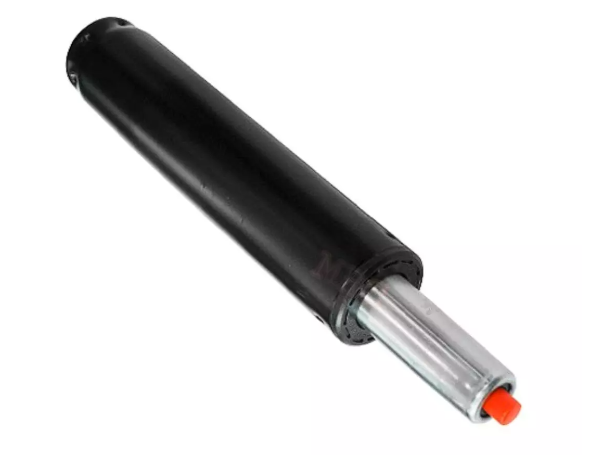
What is an office chair gas cylinder?
An office chair gas cylinder, also called a gas lift or pneumatic cylinder, is the vertical component connecting the underside of the seat mechanism to the chair base. Its main job is to let you adjust the seat height smoothly.
When you operate the height-adjustment lever, the mechanism activates the cylinder. The cylinder then allows the seat to move upward or downward. Once you release the lever, the cylinder locks at the selected height.
The simple explanation
Think of the gas cylinder as the chair's height-adjustment system. It sits between the mechanism and the base, allowing the seat to move up and down while supporting the user.
How does a gas cylinder work?
Inside the cylinder is a sealed pneumatic system containing pressurised gas. The cylinder also contains a piston and seals that control movement.
When the chair's height lever is pressed, a valve inside the cylinder opens. This allows the piston to move so the seat can be raised or lowered. When the lever is released, the valve closes and the cylinder holds its position.
This is why a healthy gas lift feels smooth when you adjust the chair. You should be able to change the height without the seat suddenly dropping or becoming difficult to move.
Why does an office chair slowly sink?
One of the most common signs of a failing gas cylinder is a chair that gradually sinks while you are sitting on it.
You may set the chair to the correct height in the morning, only to find that the seat is noticeably lower after sitting for some time. If the height continues changing even though you are not touching the adjustment lever, the cylinder is often the first component worth checking.
The internal sealing system can lose its ability to maintain pressure as the cylinder wears. Once that happens, the chair may no longer hold its selected height reliably.
Common signs of a failing gas cylinder
- The seat slowly sinks: The most recognisable symptom is the chair gradually becoming lower while you sit.
- The height does not stay consistent: You repeatedly have to readjust the chair during the day.
- Height adjustment becomes unreliable: The lever works but the chair does not respond normally.
- The chair feels unstable: Excessive movement around the cylinder connection can indicate wear or another component problem.
- The cylinder has visible damage: Physical damage, corrosion or a damaged connection should not be ignored.
What do Class 2, Class 3 and Class 4 mean?
Gas cylinders are often described using class numbers such as Class 2, Class 3 and Class 4. These classifications are intended to distinguish different grades or specifications of pneumatic cylinders.
In general, higher-rated cylinders are associated with heavier-duty applications and stronger construction. However, the class number by itself should not be treated as a universal weight-capacity guarantee because manufacturers can use different specifications and standards.
When comparing replacement cylinders, check the manufacturer's stated weight capacity, dimensions, stroke length and compatibility with your chair rather than choosing a cylinder based only on its class number.
Does a higher-rated cylinder mean a stronger chair?
Not necessarily.
The gas cylinder is only one part of the chair's load-bearing system. The five-star base, casters, seat plate, frame and tilt mechanism also have to cope with the user's weight.
Installing a heavy-duty cylinder does not automatically turn a lightweight office chair into a heavy-duty chair. If the rest of the chair is not designed for a higher load, the cylinder is not the limiting component.
This is why it is better to consider the chair as a complete system rather than focusing on one component.
Gas cylinder and office chair weight capacity
The gas cylinder contributes to the chair's overall load capacity, but the manufacturer's stated chair rating is the figure you should use when choosing a chair.
If you regularly use a chair close to its maximum rated capacity, the components experience greater loads. Choosing a chair with a comfortable margin above your body weight can provide better stability and reduce unnecessary stress on its components.
For larger users, look for chairs specifically designed and rated for higher loads instead of assuming that replacing the gas cylinder alone will increase the chair's capacity.
Can you replace an office chair gas cylinder?
Yes. Many office chair gas cylinders can be replaced when they stop holding their height.
Replacement cylinders are available in different dimensions and specifications, so compatibility matters. Before buying one, compare the old cylinder and the replacement for the required dimensions, connection sizes, stroke and overall height range.
It is also important to confirm that the replacement cylinder is suitable for the chair's mechanism and base.
What to check before buying a replacement cylinder
- Check the cylinder dimensions. Do not assume that every office chair uses exactly the same cylinder.
- Check the weight rating. Choose a cylinder suitable for the intended user and chair.
- Check the height range. A cylinder with the wrong length can change the usable height of the chair.
- Check compatibility. The cylinder must fit both the chair mechanism and the base.
- Consider the chair's age and condition. If several other components are worn, replacing the entire chair may make more sense than repairing one part.
Gas cylinder vs chair mechanism
The gas cylinder and tilt mechanism are different components, although they work together.
The gas cylinder primarily handles seat-height adjustment and supports the vertical connection between the seat mechanism and base. The tilt mechanism controls how the seat and backrest move when you lean back.
If the chair is sinking while you sit, investigate the gas cylinder first. If the chair reclines incorrectly, makes unusual noises while tilting, or will not lock into the correct position, the tilt mechanism may be the more relevant component.
Understanding this distinction can save you from replacing the wrong part.
How long does an office chair gas cylinder last?
There is no single lifespan that applies to every gas cylinder. The service life depends on the cylinder's construction, the chair's design, how frequently it is used, the user's weight and the environment in which the chair is kept.
A chair used for several hours every day places considerably more demand on its components than a chair used occasionally. Proper use and avoiding loads beyond the manufacturer's rating can help reduce unnecessary wear.
Should you repair or replace the cylinder?
When a gas cylinder has started sinking, replacement is generally more practical than trying to repair the sealed pneumatic component itself.
Before replacing it, however, make sure the cylinder is actually the cause of the problem. A loose connection, damaged mechanism or worn base can sometimes create similar symptoms.
If the cylinder is confirmed to be failing and the rest of the chair is in good condition, replacing the cylinder can extend the useful life of the chair without replacing the entire seat.
Safety when replacing a gas cylinder
Gas cylinders are pressurised components. Do not attempt to open, drill, cut, heat or otherwise dismantle the sealed cylinder.
If you are replacing one yourself, follow the replacement manufacturer's instructions and use the correct tools and method for removing the old cylinder from the chair base and mechanism. If the cylinder is stuck or you are unsure about the procedure, professional assistance is the safer option.
How to make your gas cylinder last longer
- Stay within the chair manufacturer's stated weight capacity.
- Avoid repeatedly dropping heavily into the seat.
- Keep the chair and cylinder connection properly maintained.
- Do not modify or open the sealed cylinder.
- Investigate unusual sinking or instability rather than continuing to use a damaged component indefinitely.
Conclusion
The gas cylinder is a small component with a big job. It provides the chair's height adjustment and forms an important part of the connection between the seat mechanism and the base.
If your office chair keeps sinking, the gas cylinder is one of the first things to investigate. When replacement is necessary, pay attention to compatibility, dimensions and the manufacturer's stated capacity rather than simply buying the cheapest cylinder available.
And remember that a stronger gas cylinder does not automatically make the entire chair stronger. The cylinder, base, mechanism, frame and seat all need to work together as a properly rated system.
If you are choosing a new chair, also check our office chair weight capacity guide to understand how the different load-bearing components affect durability.