Office chair casters are easy to overlook. They sit underneath the chair, rarely appear in product photographs, and usually receive attention only when a wheel stops rolling or starts damaging the floor. Yet the caster is the part that constantly connects the chair to the surface underneath you.
The right wheels can make a chair quieter and easier to move, while the wrong ones can make movement difficult or leave marks on a hard floor. Fortunately, replacing casters is one of the simplest chair upgrades you can make.
This guide explains how office chair casters attach to the base, what measurements matter, how to match wheel material to your floor, when larger wheels make sense, and how to replace a worn caster.
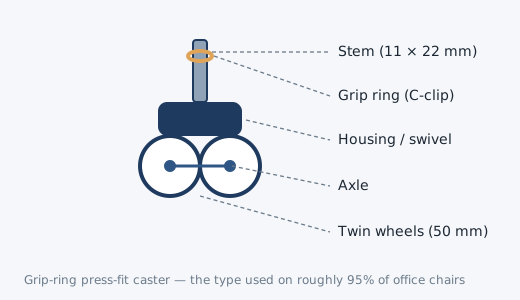
How office chair casters attach
Before buying replacement wheels, check how the existing caster attaches to the chair. There are two common mounting styles.
- Grip-ring or press-fit casters. These have a metal stem that pushes into a socket in the chair base. A small ring on the stem holds the caster in place. This is a very common arrangement on office chairs.
- Threaded casters. These have a threaded stem that screws into the chair base. They are less common on typical office chairs, so check your existing caster before ordering replacements.
The most important measurement: the caster stem
A replacement caster needs to fit the socket in your chair base. The stem diameter and length are therefore more important than simply choosing a wheel that looks similar to the original.
Many office chair replacement casters use a grip-ring stem around 11 mm in diameter, with approximately 22 mm of stem length. However, this is not universal across every chair. Different manufacturers and chair models can use different dimensions.
Some chairs use smaller stems, so avoid relying solely on a product description that says "universal." The safest approach is to remove one existing caster and measure the metal stem before purchasing a complete set.
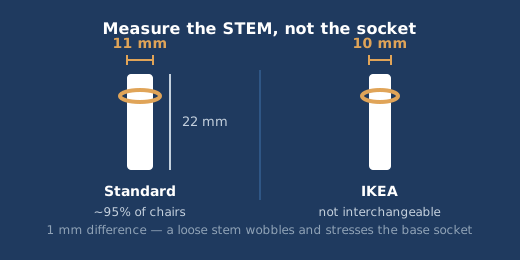
How to measure a caster correctly
Remove one caster from the chair base and measure the metal stem itself, rather than measuring the hole in the base. A digital caliper gives the most accurate measurement. If you do not have one, a ruler can still help you identify the approximate dimensions.
Check both the stem diameter and its length. Also confirm whether the caster is press-fit or threaded.
Match the caster to your floor
The floor underneath your chair should influence the type of wheel you choose. In general, a softer wheel surface is more suitable for hard floors, while harder wheels tend to roll more easily over carpet.

Soft-tread polyurethane wheels
Polyurethane, commonly abbreviated as PU, is widely used for softer office chair caster treads. These wheels can work well on hardwood, laminate, tile, vinyl, and other hard surfaces because the softer tread provides a gentler contact point.
Soft casters can also reduce the clicking and rolling noise associated with harder plastic wheels.
Hard nylon wheels
Nylon and other hard wheel materials can be useful on carpet and chair mats. Because they do not deform as easily under load, they can move across low- and medium-pile carpet without sinking as much into the surface.
On delicate hard floors, however, hard wheels may be less forgiving. If you notice scratching, marks, or excessive noise, a softer caster may be a better choice.
If you have more than one type of floor
A softer polyurethane or rubber-like tread can be a practical compromise when the chair moves between hard flooring and low-pile carpet. If the chair spends most of its time on thick or deep carpet, larger hard wheels may roll more easily.
Wheel diameter matters more than you might expect
Many office chairs come with relatively small casters. Larger wheels can make a noticeable difference when the chair has to cross carpet pile, small thresholds, cable covers, or other minor obstacles.
A larger wheel generally approaches an obstacle at a shallower angle, allowing it to roll over the obstacle more easily instead of stopping against it.

Wheels around 75 mm or larger can be useful when a chair regularly moves across carpet or uneven transitions. The trade-off is that larger casters can increase the overall seat height.
If your chair is already adjusted close to the ideal height for your desk, check the new height after installing larger wheels. Our chair height guide explains how chair height affects your position at the desk.
Caster load capacity
Caster load ratings are another specification worth checking, particularly for heavier users or chairs used for long periods every day.
A caster set has to support the user and the chair. Although five wheels share the load, the distribution is not necessarily perfectly equal while you are sitting, leaning, or moving.
For that reason, avoid choosing a replacement set whose combined rating is only just above the expected load. A suitable safety margin is preferable.
If you are close to the weight rating of your chair, also check the chair manufacturer's stated capacity. Replacing the wheels with higher-rated casters does not increase the rated capacity of the chair itself. Our office chair weight capacity guide explains this in more detail.
How to replace office chair casters

- Turn the chair over. Place it on a soft surface to avoid scratching the chair or floor.
- Remove the old caster. Grip the caster close to the base and pull it straight out. Older casters may require a firm pull. If necessary, carefully use a flat-head screwdriver as a lever while protecting the base with a cloth.
- Inspect the socket. Look for cracks, excessive wear, or deformation around the caster opening.
- Install the replacement. Push the compatible caster stem firmly into the socket until it is fully seated.
- Repeat on the remaining wheels. For the most consistent ride height and handling, replacing the complete set is preferable when the existing wheels are significantly worn.
- Test the chair. Put the chair upright and check that every wheel rotates and that the casters do not wobble excessively.
Common caster mistakes
- Assuming every caster is universal. Stem dimensions and mounting systems can vary.
- Measuring the socket instead of the stem. The replacement must match the stem that enters the socket.
- Mixing different wheel sizes. Different wheel diameters can alter the chair's balance and height.
- Ignoring the chair base. A loose caster may indicate a damaged or worn socket rather than a faulty wheel.
- Using hard wheels on a delicate hard floor. If the floor is showing marks, consider a softer wheel tread or a suitable floor mat.
- Ignoring the load rating. The replacement caster set should be appropriate for the total load placed on the chair.
Clean your casters before replacing them
Not every slow or noisy caster needs to be replaced. Hair, dust, carpet fibres, and other debris can wrap around the axle and prevent the wheel from turning freely.
Turn the chair over and inspect the axle and wheel housing. Remove accumulated hair and fibres before deciding that the caster has failed.
Regular cleaning can extend the useful life of the wheels. Our guide to cleaning and lubricating office chair wheels covers the process in more detail.
When should you replace office chair casters?
Replacement makes sense when a wheel no longer rotates properly, the tread has worn significantly, the caster repeatedly comes loose, the housing is cracked, or the chair has become difficult to move despite cleaning.
You should also inspect the chair base at the same time. If the socket itself is cracked or damaged, installing a new caster may not solve the underlying problem. In that situation, the base may need attention as well.
Should you replace all five casters?
If one wheel fails unexpectedly, replacing that single caster may be possible when an identical replacement is available. However, replacing the complete set is often the cleaner option when the original wheels are all similarly worn.
A complete set keeps the wheel diameter, tread material, and rolling characteristics consistent across the chair. It also makes it easier to match all five casters to the same floor type.
What I would check before buying replacement casters
Before ordering, I would check these five things rather than choosing a set based only on its appearance:
- Mounting type: press-fit/grip-ring or threaded.
- Stem dimensions: measure the existing caster.
- Wheel material: choose a tread appropriate for your floor.
- Wheel diameter: consider larger wheels if the chair regularly crosses carpet or small obstacles.
- Load rating: make sure the complete set is suitable for the expected load and remember that caster capacity does not increase the chair's own weight rating.
Conclusion
Office chair casters are a small component, but they have a direct effect on how the chair moves and how it interacts with your floor.
Start by checking compatibility rather than assuming a replacement is universal. Measure the existing caster stem, confirm the mounting style, and choose a wheel material suited to your floor. Soft polyurethane-style treads are generally a good option for hard floors, while harder wheels can work well on carpet.
Larger wheels can make movement easier across carpet and small obstacles, but remember that they can also raise the chair slightly. Finally, check the load rating and inspect the chair base whenever you replace the wheels.
A good set of compatible casters does not need to be complicated. The right stem, the right wheel material, and the right size are usually enough to make an everyday office chair noticeably easier and quieter to move.
Frequently Asked Questions
What size stem do office chair casters use?
Many office chair casters use an approximately 11 mm grip-ring stem, but dimensions vary between chairs. The safest approach is to remove one existing caster and measure the metal stem before ordering replacements. Check both the diameter and length and confirm whether the caster is press-fit or threaded.
What casters are best for hardwood floors?
Soft-tread casters made from materials such as polyurethane are generally a good choice for hardwood and other hard floors. They provide a softer contact surface and can reduce scratching and noise compared with hard plastic wheels.
Are bigger caster wheels better?
Larger caster wheels can make it easier to roll across carpet pile, thresholds, and small floor obstacles. The trade-off is that larger wheels can increase the overall seat height, so check your chair position against your desk after installation.
How much weight can office chair casters hold?
Caster load ratings vary by model, so check the manufacturer's stated rating rather than assuming every five-wheel set has the same capacity. Remember that the load includes both the person and the chair, and that the caster rating does not increase the chair's own weight capacity.
How do I replace office chair wheels?
Turn the chair over, remove the existing caster by pulling it from the socket or unscrewing it if it is threaded, inspect the socket for damage, and install a compatible replacement. Press-fit casters should sit firmly in the socket without excessive movement.
Enjoying our guides?
We publish practical, independent advice on office chairs, ergonomics, components, and maintenance.
Explore more Components